Describing a literary character has long been one of the most challenging elements of classroom practice. Students usually know the expected structure, yet they rarely see its deeper purpose. Character analysis often turns into a mechanical list of traits, a forced quotation, and a safe but ultimately shallow conclusion. Meanwhile, a literary character is not a catalogue of features but a construction of meaning: a reflection of an era, a worldview, emotional tensions, and internal conflicts.
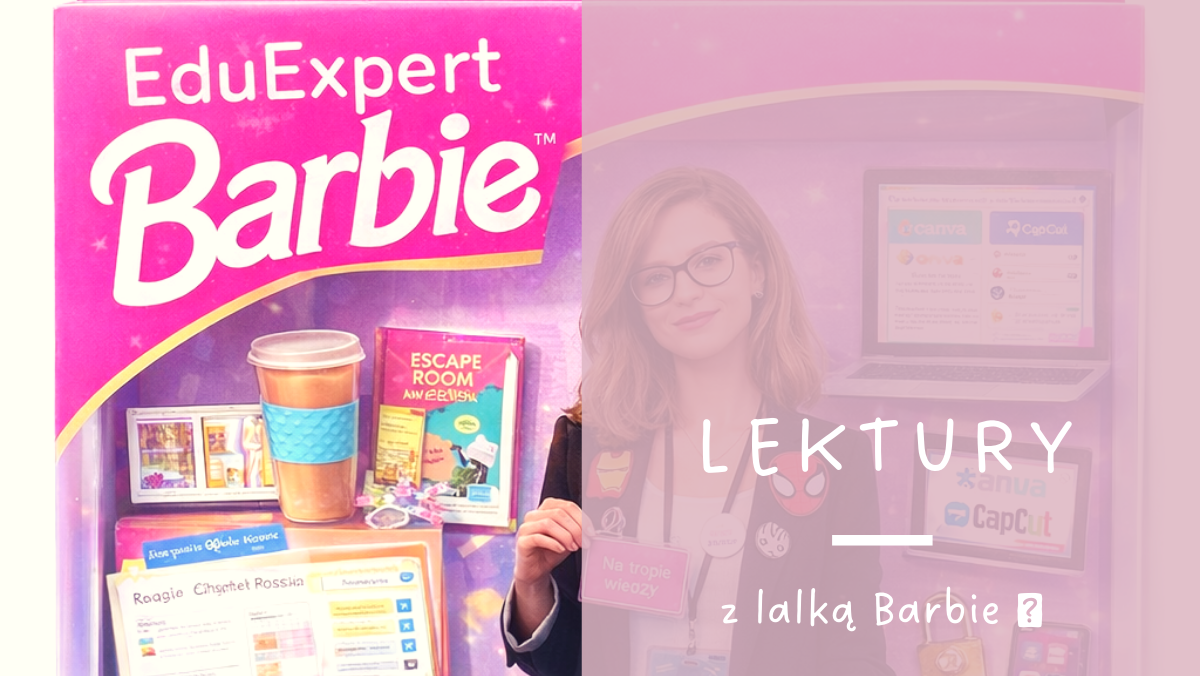
In my work with students, I increasingly look not for new content, but for a new point of entry into the text. One that allows interpretation to begin elsewhere — through image, metaphor, and the conscious selection of meaning. One such entry point has proven surprisingly effective: the idea of a collectible doll enclosed in a box.
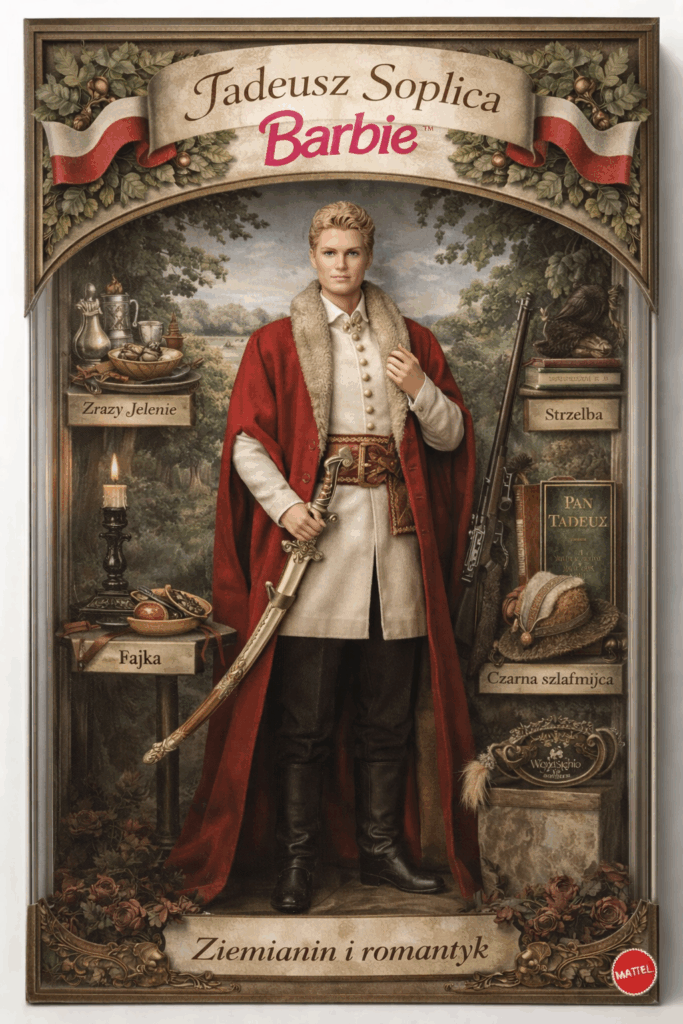
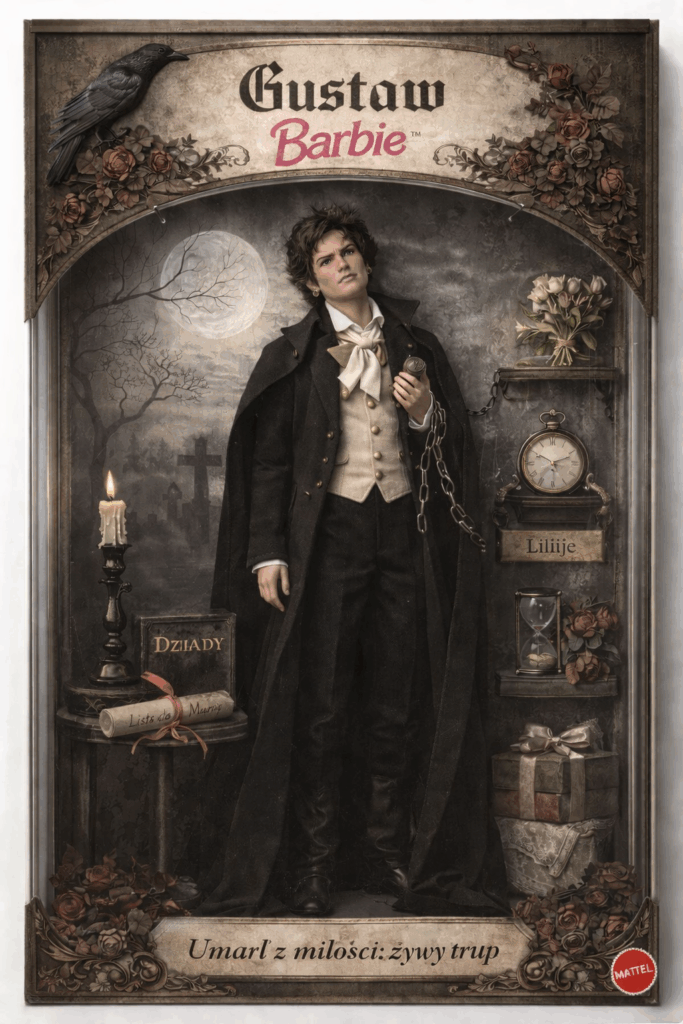
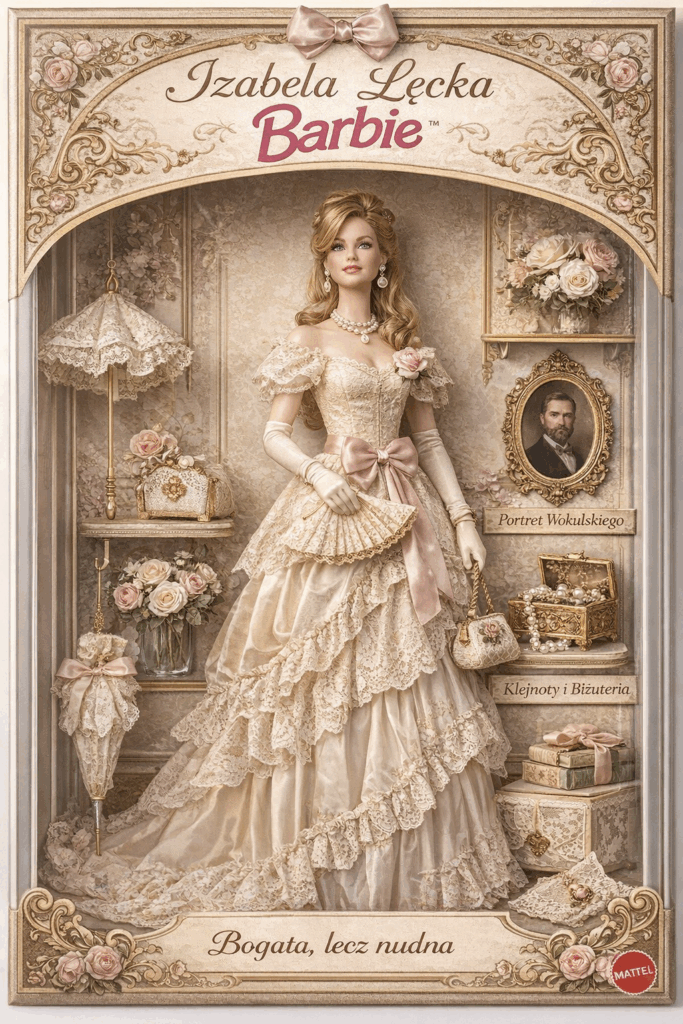
A box creates a frame. Whatever appears inside it is deemed essential; whatever is left out is excluded intentionally. Every element becomes a sign. This is precisely why the form works so well in literary interpretation. Izabela Łęcka cannot exist without the aesthetics of the salon, jewellery, and objects that emphasise her social position. Gustaw from Part IV of Dziady requires darkness, a candle, a clock, and a liminal space between life and death. Tadeusz Soplica belongs to open space, nature, and the symbols of the landed gentry’s world. In each case, the visual form becomes a commentary on the text itself.
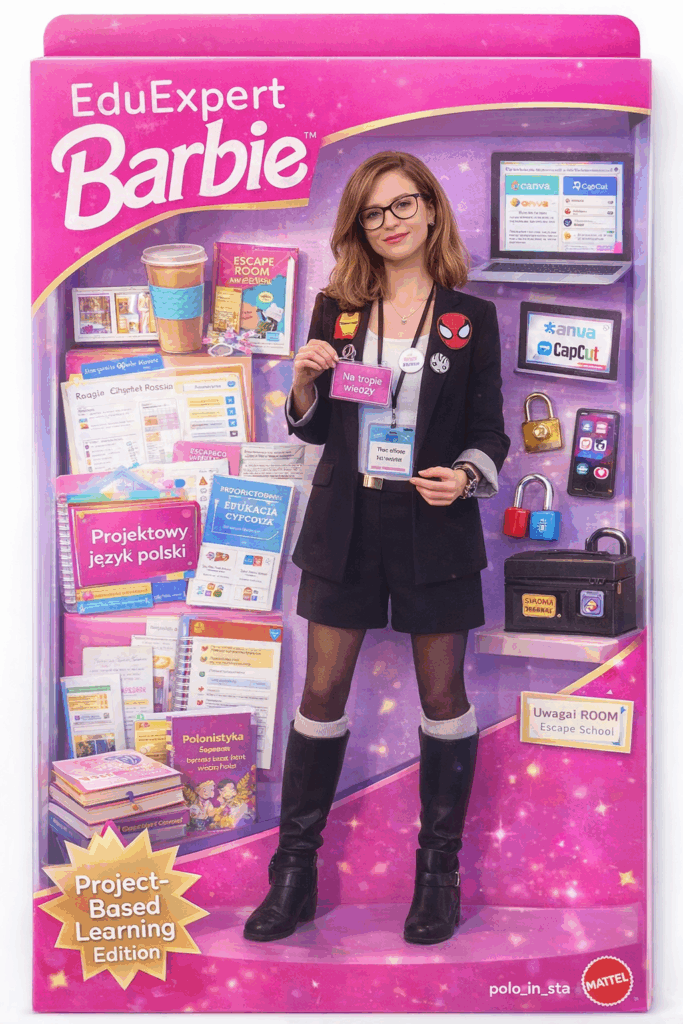
At this point, digital tools stop being an addition and begin to function as interpretive instruments. Canva, especially when supported by AI features, helps organise meaning through composition, colour, and visual hierarchy. ChatGPT, in turn, helps articulate those meanings, refine them, and translate them into precise language. It does not replace students’ thinking but supports it where problems arise with clarity, coherence, or symbolic interpretation.
As a result, the process of working with a literary character changes fundamentally. Students no longer begin with writing. They begin with interpretive decisions. They must decide what truly defines the character, which conflict is central, what kind of world the character inhabits, and which objects best express their meaning. Language comes later — not as a mechanical fulfilment of a task, but as a tool for organising thought.
Used in this way, AI does not generate ready-made interpretations. Its role is dialogic. It mediates between the literary text, the image, and language itself. ChatGPT can help transform a visual concept into a coherent character description, refine stylistic choices, suggest alternative perspectives, or reveal inconsistencies. The interpretation, however, remains the student’s own, while the teacher assumes the role of guide and moderator.
The effects of this approach are surprisingly durable. Students remember characters more clearly, recognise differences between literary periods more easily, and move more naturally toward comparison and interpretation. Importantly, this method is universal. It works with any literary text, regardless of genre, period, or convention, because it teaches students to understand characters as systems of meaning rather than sets of traits to reproduce. Literature ceases to function as a collection of textbook entries and becomes a space for reflection on values, attitudes, and ways of seeing the world.
Seen this way, literature reveals itself as a network of signs, not merely a body of content to be mastered. And this is where technology proves to be an ally of the humanities. Not because it simplifies interpretation, but because it opens new ways of seeing. AI and Canva do not replace interpretation — they activate it.
Prompt for literary character analysis and description (AI + Canva)
You are an expert in literature and the interpretation of cultural texts.
We are working on a literary character: [character’s full name + title of the work].Treat this character as a collectible doll displayed in a box.
Your task is not to summarize the text, but to interpret the character through symbols and signs.Describe the role this character plays in the fictional world and what defines them most strongly (their central conflict, desire, or attitude).
Propose elements that should appear inside the doll’s “packaging” (objects, space, props) and explain what each of them symbolizes.
Suggest a short caption or tagline that could appear at the bottom of the box and captures the essence of the character.
Finally, write a coherent, interpretive description of the character that could function as a literary characterization. Write in continuous prose, without bullet points or lists.
Use precise, correct English and an interpretive tone appropriate for upper-secondary/high school students.